
National Unity Platform Memorandum on the Protection of Sovereignty Bill, 2026
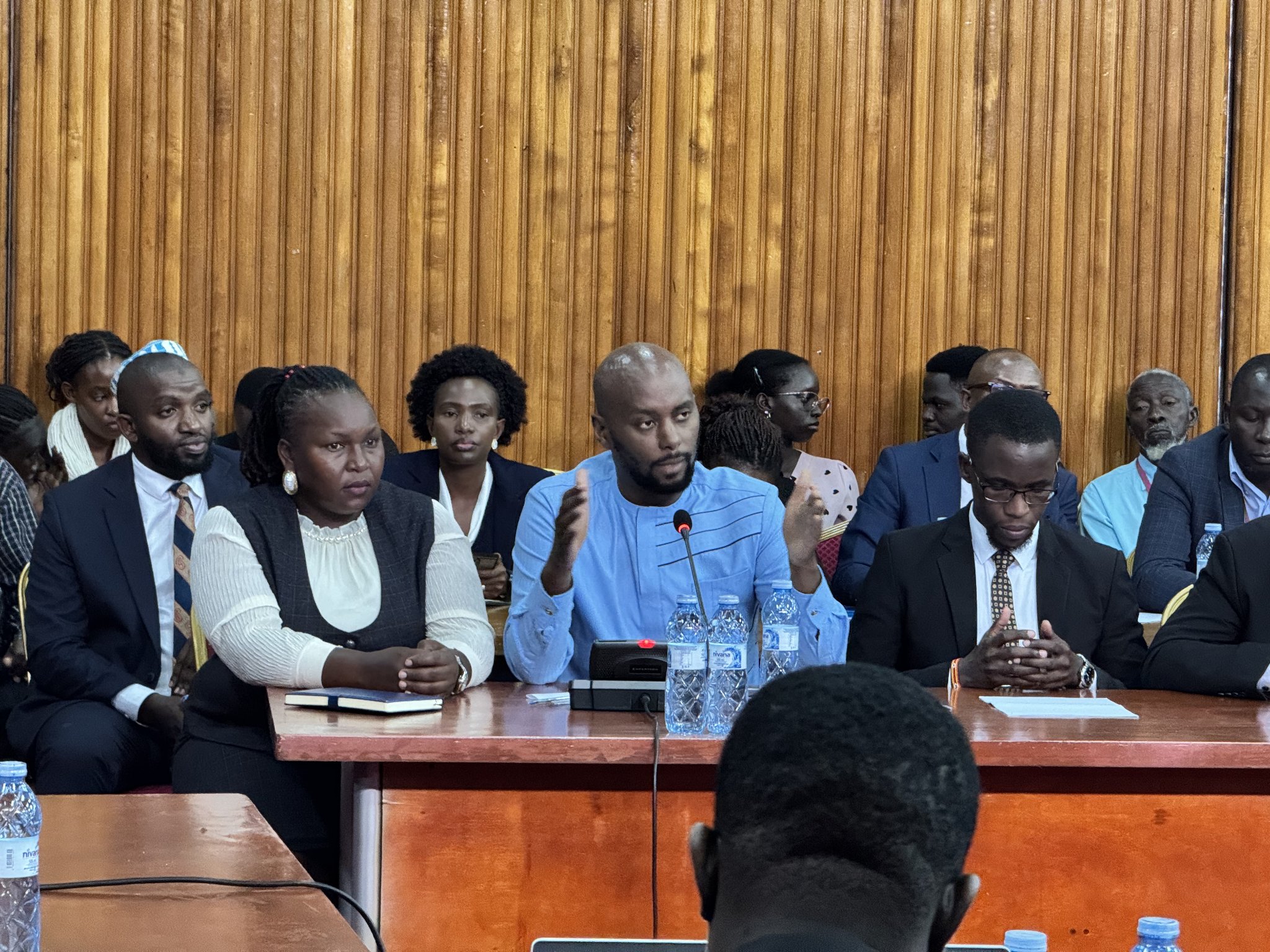
Upon invitation by Parliament, the National Unity Platform submitted the following Memorandum to the Joint Committee on Defence & Internal Affairs and Legal & Parliamentary Affairs, setting out the Party’s views on the implications of the so-called Protection of Sovereignty Bill, 2026.
A delegation of the Party comprising Dr. Lina Zedriga (Ag. President), Mr. David Lewis Rubongoya (Secretary General), Ms. Harriet Chemtai (Chairperson, Elections Management Committee), and Mr. Saasi Marvin (Secretary for Diaspora Affairs) appeared before the Committee on Friday, 24th April 2026. Due to the volume of stakeholders presenting that day, the delegation was only heard on Monday, 27th April 2026.
Below is the text of the Memorandum:
Hon. Chair and Members of the Joint Committee,
We appreciate the invitation to share these our views on the Protection of Sovereignty Bill, 2026 (“the Bill”). We received the invitation on 23rd April 2026, and, regrettably, without a copy of the Bill attached for our perusal.
We were also unable to find a copy of the Bill anywhere on Parliament’s official website, as a result of which we sourced from a third-party platform, namely, the website of the Centre for Constitutional Governance, and it is the copy secured therefrom upon which this memorandum is based.
Owing to the above circumstances, we have not had sufficient time to consult our full national and international membership structures for their views about the Bill. Nevertheless, we have put together this holding memorandum given the alarming speed at which Parliament is processing the Bill. We have also attached a copy of the views of the leadership of our diaspora about the Bill.
For clarity, we have broken down our submission into sections as follows:
1. On The Objectives of the Bill
According to the Bill, its primary objective is to provide for the protection of the sovereignty of the people of Uganda and provide for the registration and regulation of agents of foreigners, as well as their funding.
The Bill creates the impression that Uganda and its people lack the necessary laws to uphold their sovereignty. According to the Bill’s memorandum, Uganda lacks laws that protect its ability to self-govern, and the foreign aid that some members of our civil society receive causes a duplication of or conflict with Government programs thereby giving ‘outsiders’ influence over our country and undermining our right to self-determination. It is also claimed in the Bill that foreigners and their agents in Uganda use online platforms to facilitate social discord, and further suggested that civil society organizations funded by foreigners do not operate in accordance with the “interests of Uganda”.
In our humble view, the foregoing representations cannot be any farther from the truth. Uganda already has several laws that sufficiently address whatever mischief the Bill purports to seek to cure and stipulate sanctions if violated. Chief among these is our 1995 Constitution, which, in Directive Principle No. IV and Article 1, guarantees the sovereignty of the people of Uganda.
Notwithstanding the unconstitutional nature of some of their provisions, other laws that already address defects purportedly identified by the Bill include the Computer Misuse Act, the Anti-Money Laundering Act, the Political Parties and Organizations Act, the Presidential Elections Act, the Parliamentary Elections Act, the NGO Act, and many others.
Ironically, since it regained independence in 1962, Uganda has greatly benefitted from the warmth and generosity selflessly extended its way by the international community. That community currently funds nearly half of our recurrent national budget.
More still, the very system of government that Uganda is running today, and the architecture of its public service, are all largely the creatures of that same international community that the Bill dismisses as “foreigners” and seeks to shut out from Uganda’s affairs.
Yet, if it were not for the intervention of “foreigners” like the World Bank and the International Monetary Fund at the close of the 20th century, Uganda’s economy which the NRM government takes credit for would probably be doing far worse.
We are therefore convinced that the stated Objectives of the Protection of Sovereignty Bill, 2026 are not sincere and the Bill ought to be accordingly withdrawn in its entirety.
2. The speed with which the Bill is being processed
Hon. Chair and members, the lightning speed with which the Bill is progressing through the legislative process raises legitimate suspicion about the true intentions of the Bill. We feel that the manner in which the Bill has been processed so far renders not only our appearance before the Joint Committee today perfunctory, but also the final outcome of this process unconstitutional.
The Billl’s First Reading in Parliament occurred on 15th April 2026. Less than ten days later, yesterday, the Bill came up for its Second Reading. All this is happening when the consultative process meant to solicit opinions about the Bill from stakeholders and member of the public has barely begun.
This is a fundamental breach of the constitutional and procedural requirements that govern law-making in Uganda. As a deliberative body established by our Constitution, Parliament is required to genuinely facilitate public participation in its legislative processes and ensure that any law enacted truly reflects the will and interests of the people of Uganda.
Yet, by compressing the Bill’s legislative timeline in the current manner, Parliament has effectively excluded meaningful stakeholder engagement and denied Uganda’s civil society, political actors, professional bodies, ordinary citizens, and even Uganda’s international partners, a real opportunity to study the Bill and its implications and present informed views.
More critically, the urgency driving this speed has not been justified. There is no demonstrated national emergency warranting it. Neither is there any sudden threat to Uganda’s sovereignty nor any evidential basis requiring Parliament to abandon its constitutional duty to involve the very citizens in whose interests it is ostensibly enacting this law. Uganda can simply not afford to rush a Bill of this nature that fundamentally restructures its citizens’ civic-political participation and economic engagement.
3. Analysis and Implication of the Protection of Sovereignty Bill, 2026
While ostensibly seeking to protect Uganda’s sovereignty, the Bill severely limits the ability of Ugandan citizens to exercise or enjoy their fundamental rights and freedoms. It fails to meet the constitutional threshold required for such limitations by Article 43 of our Constitution, as below:
(1) The limitations do not serve a legitimate public interest.
Whereas, on the surface, the Bill’s stated Objective of protecting the sovereignty of Uganda and its citizens appears plausible and of of legitimate public interest, it collapses under scrutiny for three reasons:
(a) The Bill conflates the interests of a sitting government with the interests of the wider public. This is seen, for example, in Clauses such as Clause 2(2)(g) and Clause 8(3), which prohibit citizens from influencing the public to oppose the policy of Government and from hindering or disrupting the implementation of Government policy, respectively.
(b) The bill targets conduct that is already regulated by existing laws as we already submitted above. The public interest apparently claimed in the Bill’s Memorandum, that is, of filling legal gaps, is therefore factually false in the face of the existing law.
(c) Several provisions of the Bill have no conceivable public interest anchor. For instance, Clause 2(2)(g), which implicitly requires anyone who “influences the public to oppose the policy of Government” to first seek approval of that government does not protect any public good. Instead, it shields the policy of that government from public criticism, thereby unjustifiably limiting the public’s freedom of speech and its right to participate in the affairs of government.
This Clause alone effectively bans the political opposition.
(2) Even where such public interest exists, the limitation must not amount to political persecution, and it must be demonstrably justifiable in a free and democratic society.
Regarding political persution, the Bill effectively permits what Article 43(2)(a) of the Constitution absolutely prohibits.
For instance, Clauses 3, 4, 6(6), 14(1), 15, 16, 17, 18, 19, 20, etc of the Bill effectively place entire regulatory and enforcement mechanism of the Bill under the direct control and/or guidance of the Minister of Internal Affairs, a political appointee who is appointed by and answerable to the sitting President.
The said Clauses grant the Mnister wide discretion to register, deregister, refuse, suspend, or revoke, etc the operational certificates of anyone deemed to be an “agent of a foreigner” with no meaningful procedural safeguards to restrain the exercise of that power. This exposes opposition politicians, NGOs, investigative journalists, researchers, whistleblowers, and other real and perceived opponents of the Minister and his appointing authority to political persecution.
The limitations are disproportionate and, thus, unjustifiable.
As we have stated above, the objectives stated in the Bill’s Memorandum do not match the provisions therein enacted. For instance, it is our view that Clauses including 5(3), 7(4), 8(3), 10, 12, 13, 14, and 22 in the Bill effectively suppress dissent instead of protecting the self-determination of Ugandans.
We also consider the following clauses to be overly broad and disproportionate, for the reasons indicated against each:
a) The definition of a “foreigner” under Clause 1 of the Bill is as ridiculous as it is the foundational source of the Bill’s overbreadth. Every substantive offence in the Bill is constructed around this definition, meaning that its disproportionate reach infects almost every provision that follows and therefore collapses the Bill entirely.
The definition is unconstitutional because, first, it includes Ugandan citizens residing outside Uganda, whom it renders “foreigners” in their own country by the mere fact of physical location abroad. Any Ugandan in the diaspora who sends money to their family or funds a political campaign or communicates political views to relatives at home is considered a foreigner and thus whoever is based in Uganda who wishes to deal with him or first requires ministerial permission!
Second, and most critically, the definition empowers the Minister to declare any person or body a “foreigner”. This delegation grants the Minister open-ended power to expand the definition of foreigner to capture any individual or organisation at will without any defined criteria. Such a definition which can be expanded by Ministerial decree at any time provides no legal certainty whatsoever, thereby violating the right to a fair trial and the principle of legality.
It is also ridiculous because it implies that even government officials who go out of the country on official trips automatically become foreigners who are then forbidden to conduct the business of the State!
b) Clause 5(3), in which the phrase “interests of Uganda” is undefined, renders the related offence vague. This violates citizens’ rights to free speech and association, as well as right to participate in their own governance.
c) Clause 6(1) & (2) which require Cabinet approval before any person performs functions ordinarily the responsibility of government as listed in the Sixth Schedule to the Constitution cripple legitimate NGO service delivery in sectors like health and education, in disproportionate violation of citizen’s freedom of association, right to work, civic participation, etc.
d) Clause 7(3) criminalises policy development without Cabinet approval, thus effectively outlawing opposition manifestos, academic policy work, research, etc, which is a disproportionate violation of citizens’ freedom of expression, thought and opinion.
e) Clause 8(3) prohibits acts that hinder or disrupt Government policy implementation without necessarily requiring unlawfulness or harm. Left as it is, this clause converts such actions as democratic opposition, litigation, and even journalism into criminal conduct, which constitutes a disproportionate violation of the freedoms of expression and freedom of assembly.
f) Clause 11(2) which prohibits foreign-linked influence over our elections, read together with the expansive definition of a “foreigner” in Clause 1, eliminates voter education and political engagement by Ugandans in the diaspora. This is tantamount to disenfranchisement and violates citizens’s rights to vote and participate in electoral processes).
g) Clause 12(1) which prohibits any meeting aimed at interfering with Government operations, without establishing a threshold for when such a meeting would become unlawful, effectively outlaws opposition political rallies, , trade union activities, etc in violation of freedoms protected by Articles 29(1)(a) & (d), and 40(3).
h) Clause 13 makes it an offence for anyone to publish any information (even if it may be true) or participate in any act “that weakens or damages the economic system or viability of the country, causing economic disruption, insecurity or instability”. Besides being vague, this provision suppresses journalism and political criticism, which disproportionately violates citizens’ rights to speak freely and access to information, as well as Art. 43 itself as no legitimate democratic society criminalises truthful publication.
i) Clause 22(1) which imposes a funding cap of UGX 400 million per 12 months on affected organizations is likely to cripple activities of such organizations as opposed to encouraging them.
j) Clause 23(1) which defines disruptive activities to include participation in demonstrations retrospectively declared unlawful imposes a chilling effect on political expression and civil society. this violates the freedoms of assembly and association, as well as Uganda’s obligations under regional and international Charters.
Further, there is no rational connection between the harsh penalties proposed in the Bill and protecting Uganda’s sovereignty, as the means the Bill choses to do so are grossly disproportionate to the ends it purportedly seeks to achieve. We accordingly find the penalties in the following Clauses too harsh:
a) Clause 5(4), which proposes a fine of up to UGX 2 billion or 20 years imprisonment, or both, for promoting “interests of a foreigner”;
b) Clause 6(4), wich proposes a fine up to UGX 2 Billion or 20 years imprisonment, or both, for exercising Government functions without approval;
c) Clause 7(4) which which proposes a fine up to UGX 2 Billion or 20 years imprisonment, or both, for developing policy without Cabinet approval, etc. Other Clauses in this category include 10(2), 11(3), 12(2), 13, 14(2), 22(2), 23(1), 26(2), and 28(2). Even if one were to assume that the objectives and provisions of the Bill are legitimate, the penalties proposed by these Clauses are nevertheless excessive, high handed, and unjustified altogether.
Rather than using the most minimal options available to limit the rights of Ugandan citizens in pursuit of its stated objective of protecting our sovereignty, the Bill instead resorts to the most restrictive options such as criminal prosecution with very long prison sentences and steep fines yet less restrictive means would have served the stated purpose equally well, if not better.
4. Conclusion
The Protection of Sovereignty Bill, 2026 is unconstitutional and dangerous in its implications for democratic governance in Uganda. Its alleged objective of protecting Uganda’s sovereignty is not only undermined by the existence of adequate legislation already in Uganda’s statute books, but is also directly contradicted by the Bill’s operative provisions which systematically dismantle the very fabric of civic, political, and associational rights and freedoms through which the people of Ugandan meaningfuly exercise their sovereignty.
The Bill concentrates unchecked executive power in the Minister of Internal Affairs and criminalises ordinary democratic participation. It imposes penalties to severe to be considered merely regulatory, and defines “foreigner” in such an absurd and expansive manner that renders every substantive provision anchored on the definition to be constitutionally defective.
We accordingly call upon the Joint Committee to reject the Bill in its entirety and recommend its withdrawal to the House. We remain committed to the defence of the Constitution and the democratic freedoms it guarantees to every Ugandan, no mater where they reside in the world.
Thank you.